
Subdomains vs Subfolders: Which Is Better for SEO and Why? Guide By High Rnaker
When building and managing an website, the way you are organize your pages can affect how easy an site is to manage and understand. One common question that among website owners and SEO professionals are subdomains vs subfolders, which is an better for SEO and why?
Both structures have an valid uses. The right choices depends on type of website, how closely the content is connected to main site and how their different sections need to be managed.
What Is a Subdomain?
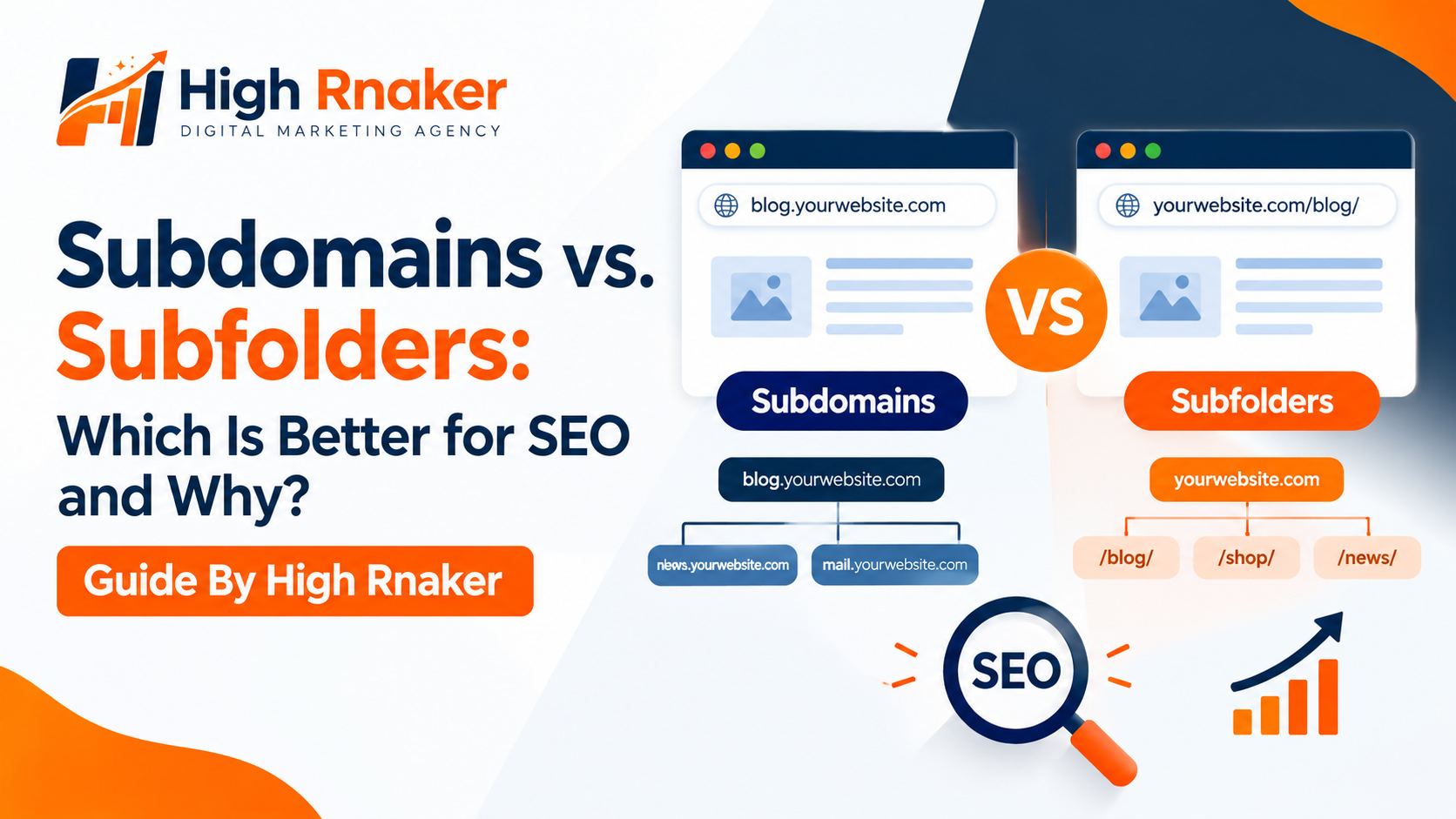
A subdomain is an separate section placed before to the main domain name. For example: blog.example.com.
In this example, blog is the subdomain. Businesses may use an subdomains for blogs, applications, customer portals, support centers or other sections that need to operate an separately from main website.
Software company might use app.example.com for its customers application while to keeping that example.com for its main business website. A subdomain can have to its own technology, hosting setup, design and management system. This makes it useful when an particular section of website needs to work independently.
Subdomains vs Subfolders for SEO
When comparing subdomains vs subfolders for SEO, it is an important to avoid the idea that one options is automatically guarantees better rankings. Search engines can understand the content that is hosted on subdomains. A subdomain is not automatically bad for SEO and using one does not means your pages that cannot rank well.
However, subfolders can often be an easier to manages when an content is closely connected to main website. Internal linking, content organization, SEO monitoring and website management can be simpler when it is related to pages that are kept under an same domain structure. This is why many businesses are prefer subfolders for blogs, resources, guides and service-related content.
When Should You Use a Subdomain?
These are the situations where using an subdomain makes the perfect sense. For example, an company may have its main website at: example.com and its customer application at: app.example.com.
The application may use completely to different technologies and require to all user accounts, authentication and an separate development process. In this situation, separating it from an main marketing website that can make technical and has organizational sense.
Another example is an dedicated customer supports the platform: support.example.com, If this support system operates independently from the main website, an subdomains can provide an clean way to separate the two.
The key is to use an subdomain because there has an genuine reason for separation, not simply because you has to believe it and will be improve an SEO.
How Internal Linking Fits Into the Decision
Internal linking is an more important part of SEO regardless of your URL structure. Suppose you have publish an article about keyword research. You might link it to another articles about on-page SEO and then link both articles to your SEO service page. These links are help the users discover related the information and help the search engines understand how your content has connected.
You can still create links between an main domain and an subdomain. However, when closely related content that is divided between different sections, managing an overall structure can sometimes become more complicated. For an businesses blog that is closely connected to main website, an subfolder can therefore be an straightforward option.
Do Subfolders Have More SEO Authority?
Another most common question is whether subfolders that is automatically have more authority than subdomains. SEO does not work through one simple authority score. Search engines are consider many different signals when evaluating the pages and websites.
A page on subdomain can rank successfully. At same time, separating closely are related content into an subdomain can introduce additional considerations for website structure, linking, tracking and management.
Because of this, there is usually little reason to move an closely related blog and resources are section to subdomain simply because an someone claims it will produce better rankings. Focuses on creating useful content and has technically healthy website first.
Don’t Change Your Website Structure Without a Good Reason
If your website already uses an subdomains successfully, you do not has necessarily need to move everything into subfolders. Changing an URL structure can involve redirects, internal links, canonical URLs, indexing, analytics and other technical details. If an migration is poorly planned, it can create an unnecessary SEO problems.
Before changing on your structure, consider why an current setup exists and whether there is an genuine business and technical reason to changes it. A website should not be redesigned around an SEO theories alone.
Which Is Better for SEO?
So, subdomains vs subfolders, which is better for SEO and why? For most of websites where an content is closely related to main domain, subfolders are often an simpler and more practical choice. For example: example.com/blog/ , is an natural structure for the company blogs that support the main business.
However, an subdomain may be more suitable when an section functions as an separate application, platform, support system or independently manages part of business. Neither option is an automatically a ranking shortcut.
Final Thoughts
Choosing between an subdomain and subfolder should depend on purpose of content and how your website is more managed. Use an subfolders when your blog, resources, services, products and other content that are closely connected to main website. Use an subdomains when an section genuinely that needs to operate an separately for technical, organizational and business reasons.
Most importantly, do not choose an URL structure based only on belief that one will automatically rank on higher. A strong SEO strategy also depends on useful content, relevant keywords, internal linking, technical performance, good website structure and an positive experience for visitors. When these structures are support on your website purpose and makes on your content easy to find and understand, you are already making an much stronger SEO decision.