
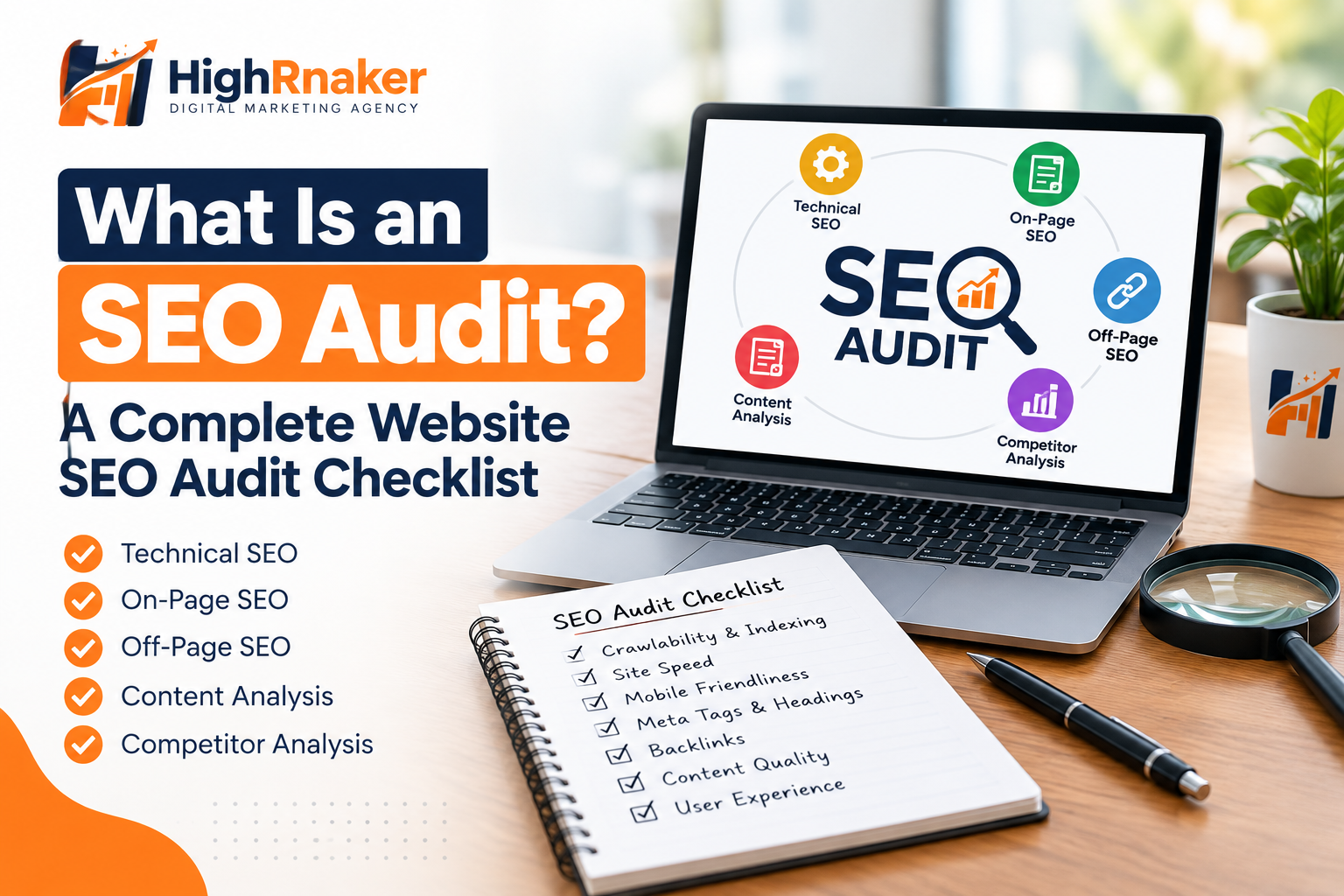
What Is an SEO Audit? A Complete Website SEO Audit Checklist
If your website is not getting an search visibility you can expect, the problem may not always be your content. Technical issues, poor page structure, slow loading times, broken links, weak internal linking and other problems solving that can make it harder for search engines and visitors to use your website. An SEO audit that does not guarantee higher rankings. Instead, it helps you to understand what is working, what needs to improvement and where your website may be losing opportunities.
What Is an SEO Audit?
An SEO audit is an systematic examination of different parts of website that influence to its visibility in search results and the experience of its visitors. A typical audits that can cover the technical SEO, on-page SEO, content, internal links, website structure, mobile usability, indexing and backlinks.
Think of it as an health check for your website. You are not to simply looking for mistakes. You are trying to discover the areas where relatively simple improvements could make website easier to understand and navigate.
Why Is SEO Audit Important?
Websites changes an over time. New pages are added, old content is updated, plugins are installed, URLs are changed and links can become more broken. Because of this, problems that appear even websites that were previously well organized. SEO audit gives you an opportunity to review website as an whole rather than looking to individual pages separately. It also help to you prioritize your SEO works.
Website SEO Audit Checklist
A useful SEO audits that should cover an several important areas. The following checklist can help you to review main parts of your website.
Check Website Indexing
First, make sure that search engines can discover and index the pages that you actually want to appear an search results. Review the important pages and check for accidental noindex directives, blocked resources or other settings that could prevent search engines from accessing useful content.
Google Search Console that can help website owners to understand indexing issues and see how the Google interacts with their pages. Not every pages that needs to be indexed. Some pages, such as certain administrative and duplicate pages, that may intentionally be excluded. The goal is to make on sure your important pages that are available for search engines.
Also Read: Best SEO Services in Lahore
Review Your Site Structure
A clear website structure that makes it easier for visitors to find the information and helps to search engines understand how different pages are relate to each other. Your main categories that should be logical and important pages should not be buried an several clicks deep without an good reason.
For example, an online store might organize to its website into categories such as handbags, shoulder bags, tote bags and accessories. Visitors should be able to move between these sections without the confusion.
Check Page Titles and Meta Descriptions
Each important pages that should have an clear and relevant title. Titles should describes what these pages is actually about rather than trying to attract more clicks with vague wording. Meta descriptions that should give users an useful reasons to visit the page. Avoid creating an identical titles and descriptions for many different pages. Each important page that should have on its own clear purpose.
Review Your Content
Content is one of most important parts of SEO audit. Look for pages that are outdated, very thin, repetitive, confusing or no longer useful. Ask whether that each page provides an clear answer to topic it targeted. Do not add an keywords simply to make an page appear more optimized. Natural languages that have useful information should remain the priority.
Check Keyword Targeting
Reviews the search terms that each important pages that is designed to address. The keywords that should match an actual purpose of page. Someone searching for “how to clean an leather handbag” has an different intent from someone searching for “buy leather handbags.” If your pages that does not satisfy an intent behind an search, simply adding an keyword more times that will not solve the problem.
Test Internal Links
Internal links that connect the pages within your own website. They can help the visitors to discover related content and help search engines to understand the relationships between pages. Look for important pages that receive few and no internal links.
For example, a blog post about choosing everyday handbags that could link naturally to related articles about handbag sizes, materials and care. Use descriptive anchor text rather than repeatedly using vague phrases such as “click here.”
Find Broken Links
Broken links create an poor experience for visitors and that can make website maintenance more difficult. During an audit, check both internal and external links. If an page has been permanently removed, decide whether these link should be replaced, removed and redirected to genuinely relevant alternatives. Do not redirect every broken URL to homepages simply to remove an error. They replacement should make an sense for the visitor.
Check Mobile Usability
Open your website on different screen sizes and test important pages. Check whether the text is readable, menus work properly, buttons are easy to tap and forms function correctly. A page that looks an perfect on large monitor that may still create problems on phone. Since many users browser websites on mobile devices, this part of audit should not be overlooked.
Review Your Backlink Profile
During an SEO audit, review an websites linking to your domain and look for unusual and potentially problematic patterns. Do not assume that every unfamiliar backlink is more harmful. A website that can naturally receive an links from many different sources. The important things is to understand your link profile rather than reacting to every unfamiliar domains.
Final Thoughts
Understanding what is SEO audit is first step towards maintaining an healthier website. A proper audit looks to beyond keywords and examines technical SEO, content, site structure, links, mobile usability, performance and indexing.
Use an checklist regularly, but do not treat SEO as an one-time task. Websites continue to change, search behavior evolves and new issues that can appear. Regular reviews that can help you to keep your website useful for visitors and easier for search engines to understand.