
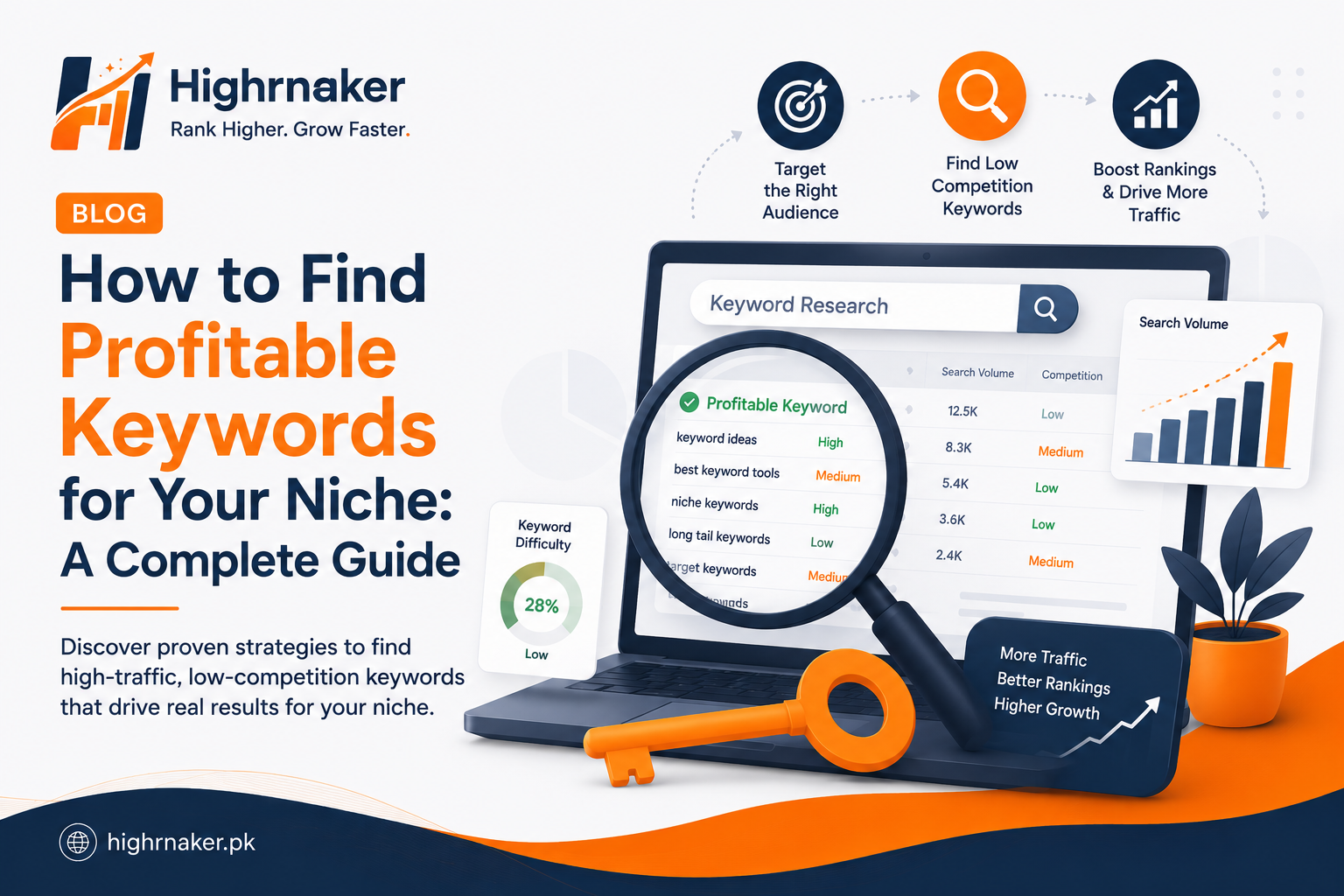
How to Find Profitable Keywords for Your Niche: A Complete Guide
Finding profitable keywords is one of most important parts of an successful SEO strategy. You can create an excellent content, build backlinks and optimize your website, but if you can target your keywords that have an little search demand and no business value, your efforts that may produce very little return. Profitable keywords research that helps you to discover the search terms your potential customers that use and identify the opportunities that bring targeted traffic, leads, sales and other valuable results.
What Makes Keyword Profitable?
A profitable keyword for SEO is an search query that can attract people who can valuable to your business. Depending on your website, profitability might that mean generating the product sales, service inquiries, affiliate commissions, advertising revenue, email subscribers or qualified leads.
For example, someone searching for “what is running” may be simply want information. Someone searching for “best running shoes for flat feet” is much closer to the raking to making an purchasing decision. Both keywords may be more relevant to sports website, but second keyword could have more greater commercial value.
Start With Your Niche and Seed Keywords
First step to finding profitable keywords for your niche is to creating an list of seed keywords. These are broad words and phrases to describes your products, services, audience or main topics.
Suppose you can operate website selling home office furniture. Your seed keywords are might include “office chair,” “standing desk,” “desk accessories,” “ergonomic chair,” and “home office setup.”
Study Search Intent Before Search Volume
Search intent is that reason behind to person’s search. Understanding it is more essential because an keyword can have excellent traffic potential but still can be unsuitable for your website.
Common types includes in informational, commercial, transactional and navigational searches. Someone searching “how to clean an office chair” has an informational intent, while “best ergonomic office chair under $300” has an commercial investigation intent. Search such as “buy ergonomic office chair online” has an stronger transactional intent.
Before targeting to those keyword, search on Google to examine these results. If these pages are ranking on first page are mostly product pages, creating these basic informational article may not satisfy these search intent. Your content format should match what searchers expect.
Find Long-Tail Keywords
Long-tail keywords are niche websites are specific search queries that generally have an lower search demand than broad head terms. They have an valuable because they often represent an clearer problem, need or buying intention.
For example, instead of targeting “coffee machine,” you could be consider phrases such as “best coffee machine for a small office,” “automatic coffee machine for an home under $500,” or “how to clean an automatic coffee machine.”
Analyze Your Competitors
One of fastest ways to discover profitable keywords that your competitors are ranking for is to study competing websites. Search on Google for your main niche keywords and identify these websites that offer similar products, services, or content.
Then investigate these keywords bringing those competitors an organic traffic. Look for terms where they are ranking but your website is not. This approach can reveal all the topics you may not have considered during an initial brainstorming.
Look for Low-Competition Keywords
If your website is new and has limited authority, targeting an highly competitive keywords immediately may be more difficult. Instead, to look for low-competition keywords with an commercial intent.
Keyword difficulty all the scores from SEO platforms that can help you to compare opportunities, but they should not be treated as an absolute rankings. You should also has an manually inspect search results.
Also Read: How Long Does SEO Take to Show Results?
Evaluate Search Volume and Traffic Potential
Search volume tells you to about approximately how frequently people search for keyword, but it does not has tell all entire story. Keyword with an high volume may have an more low click potential if these search results contain features that answer all the query immediately.
Traffic potential also differ from all search volume of single keyword because an one well-optimized page that can rank for many closely related queries. Keyword research tools are increasingly provide an traffic-potential estimates to help and identify all topics where ranking could attract visitors from multiple related searches.
Therefore, don’t automatically reject an keyword because its individual search volume that appears small. Group of closely related an long-tail searches that collectively generate meaningful traffic.
Use CPC as Supporting Metric
Cost per click and CPC, it can provide another useful clue about commercial value. Advertisers that generally pay more for keywords when clicks are more valuable to their businesses, although CPC that should never has an treated in guaranteed measure of SEO profitability.
Keyword with an relatively strong CPC may indicate that businesses are willing to pay for more traffic from that search. Combine this information with that search intent, competition, search volume and your own businesses model before deciding whether to target it.
Find Keyword Ideas From Real Customers
Keyword tools are very useful, but your audience can provide some of best long-tail keyword ideas. Pay attention to questions customers ask through email, support requests, reviews, social media, forums and community discussions.
For example, if customers repeatedly asking for, “What size office chair is best for a short person?”, this question could become an more valuable content topic. Real customer language can reveal all specific problems that traditional keyword research tools may not immediately show. Forums and community discussions can particularly useful for discovering specific, conversational search queries and content ideas.
Don’t Forget Keyword Trends
Profitable keyword today may not remain an equally valuable throughout year. Some searches are for seasonal, while others are influenced in trends, new products, technology and changes in consumer behavior.
Check an historical trends where possible and consider whether these keyword represents all consistent demand or temporary spike. Evergreen keywords that can provide value for years, while seasonal keywords that may require content to be published well before the period when demand increases.
Final Thoughts: Profitable Keywords
Learning how to find an profitable keywords for your niche is about much more good to finding keywords with high search volume. Most valuable opportunities are those that combine an realistic ranking potential with genuine business value.
Start with the broad seed keywords, expand your list using an keyword research tools, analyze all competitor keywords, study search intent, find relevant long-tail phrases, evaluate competition and consider how each keyword could contribute to your business.
Most importantly, think like your customer. Ask what the problem they are trying to solve, what information they need and what they might do next. When your keyword strategy connects to real search demand with real customer needs, that your SEO content has an much better chance of generating traffic that actually matters to your business.