
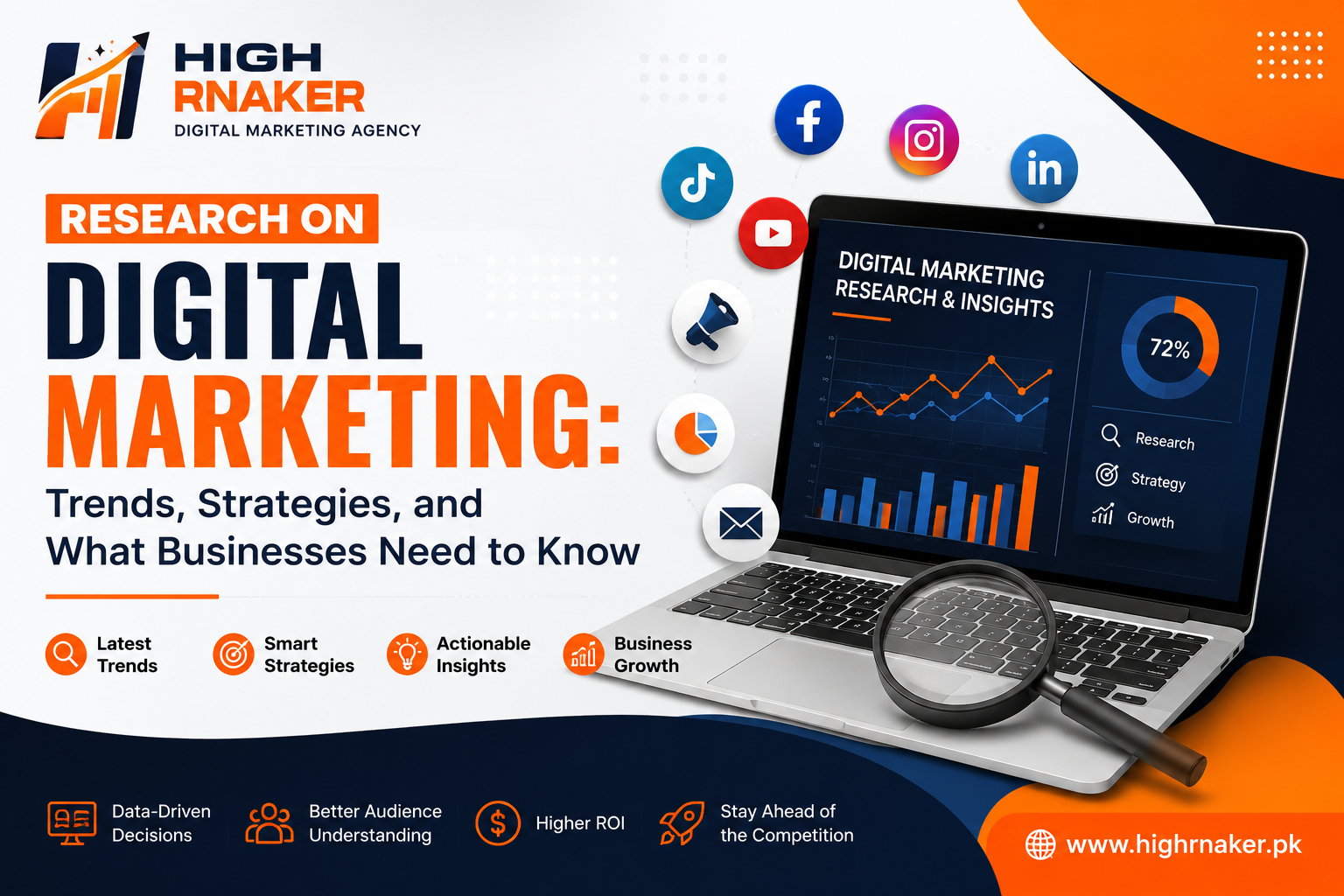
Research on Digital Marketing in 2026: Trends, Strategies, and What Businesses Need to Know
Digital marketing in 2026 is not simply about posting social media, ranking on Google and running paid advertisements. The way people are discover the information, compare products and decide which businesses are to trust is changing quickly. Today we will discuss about research on digital marketing.
Artificial intelligence is becoming part of everyday marketing work, search is becoming an more conversational and customers are increasingly exposed to content created across many on different platforms.
Recently industry researching the points to three major forces the shaping digital marketing in 2026 and artificial intelligence, changing search behavior and growing importance of trust and first-party data.
AI Is Becoming Part of Everyday Marketing
Artificial intelligence are probably an biggest changes are discussed at research on digital marketing in 2026. Businesses are using AI for tasks such as generating ideas, analyzing information, creating content variations, personalizing customer experiences and automating an repetitive marketing work.
For small businesses, this does not mean to handing your entire marketing strategy over to AI. Better approach is to use it where it saves time while keeping an people are involved the decisions that require judgment.
For example, AI can help an marketing team that turn one product idea into several social media concepts. An person can choose the strongest ideas, check the information, adjust an tone and make sure content is actually sounds appropriate for brand. That human reviews matters because producing more content does not automatically make an marketing campaign better.
Search Is Changing, but SEO Is Not Dead
Search behavior is another major area to watching in 2026. People increasingly use conversational queries and AI-powered are search experiences when looking for answers, products and recommendations. This means businesses are need to think beyond traditional keyword rankings.
Researches from Kantar describes an rise of AI-mediated discovery and points to growing importance of making brand information clear, structured, relevant and understandable to AI systems.
For example, local furniture company should not only optimize an page for “furniture store.” It can answer practical questions such as how to choose an right bed size, what to consider before buying an sofa or how to measure room for furniture. Helpful content gives both search engines and potential customers to get more useful information to work with.
First-Party Data Is Becoming More Important
Another clear theme in 2026 marketing research is that growing importance of first-party data. This is an information an business collects directly through legitimate an customer interactions, such as email subscriptions, purchases, website activity or customer preferences.
Experiance 2026 research reports that 70% of B2B marketers plan to increase to their use of first-party data. For businesses, the practical lesson is so simple, build an direct relationship with your audience rather depending entirely on another platform.
An email list, customer database, website analytics and loyalty program are provide an useful insight into what customers are actually want. Businesses should also be an transparent about how customer information is collected and used. Trust becomes much harder to build when an customers feel that their information is being handled carelessly.
Social Media Is Becoming More About Real Connections
Social media remains an more important part of digital marketing, but simply publishing an promotional posts is unlikely to be enough. Research into 2026 social trends are highlights tension between to increasing AI-generated content and audience are demand for content that feels genuine and relevant.
Local businesses can show the people behind an company, demonstrate products, answer customer questions, explain how something works or share useful advice. The content does not have to look like an major advertising campaign. This goal is not to follow every social media trend. It is to find formats that makes an sense for audience and product.
Trust Is Becoming an Marketing Advantage
As AI makes it an easier to produce the large amounts of content, consumers have more reason to get question what they see online. This makes an credibility increasingly more important.
Research from Smart Insights highlights trust, transparent privacy practices, user-generated content, reviews and case studies as more important elements of digital marketing in 2026.
For businesses, trust can be built through relatively in simple actions, keep product descriptions accurate. Make pricing and policies are easy to understand. Respond to customer questions are honestly.
Show real examples of your products and services. If customers are provide reviews, make them easy to find. This approaches may not produce an immediate spike in traffic, but it can make an people who do visit your website more comfortable taking an next step.
Personalization Needs to Feel Useful
Personalization has been part of digital marketing for many years, but way of businesses approach it is changing. Customers generally appreciate an relevant recommendations and useful messages, but excessive and poorly handled personalization can feel intrusive.
Research for 2026 increasingly to connects the personalization with consent, context and responsible use of customer data.
Businesses Need to Measure More Than Clicks
Another more important lesson from current digital marketing research is that need to look beyond the surface-level metrics. Likes, impressions and website visits can useful, but they do not necessarily tell you whether the marketing is helping an business.
A campaign receiving thousands of views may be less valuable than one that produces smaller number of genuinely interested customers.
Businesses should connect an marketing activity with meaningful outcomes such as qualified leads, sales, repeat purchases, email sign-ups or customer inquiries.
This becomes especially an important AI-powered search and zero-click experiences make an more traditional traffic measurements less straightforward. Current 2026 research notes that marketers are increasingly looking at an broader measures of visibility, attribution and business impact.
What Should Businesses Do in 2026?
Biggest lesson from research on digital marketing in 2026 is that businesses do not need to chase in every new technology. They need an strong foundation and willingness to adapt. Most importantly, keep learning from own customers. Analytics can show what people do, while customers conversation are help to explain why they do it.
Final Thoughts
Digital marketing in 2026 is becoming an more intelligent, more automated and more complicated, but the fundamentals have not be disappeared. People still want useful information, good products, clear communication and businesses they can trust.
AI may change an how content is created and how people are search for information. Social platforms may change to their algorithms. New marketing tools will be continue to appear. But businesses that understand to their customers, create genuinely useful content, protect customer trust and measure an real business results will be in much stronger position.
The smartest digital marketing strategy for 2026 is therefore an not about using newest tool simply because it exists. It is about to combining the technology with good judgment and keep them customer at center of every decision.